
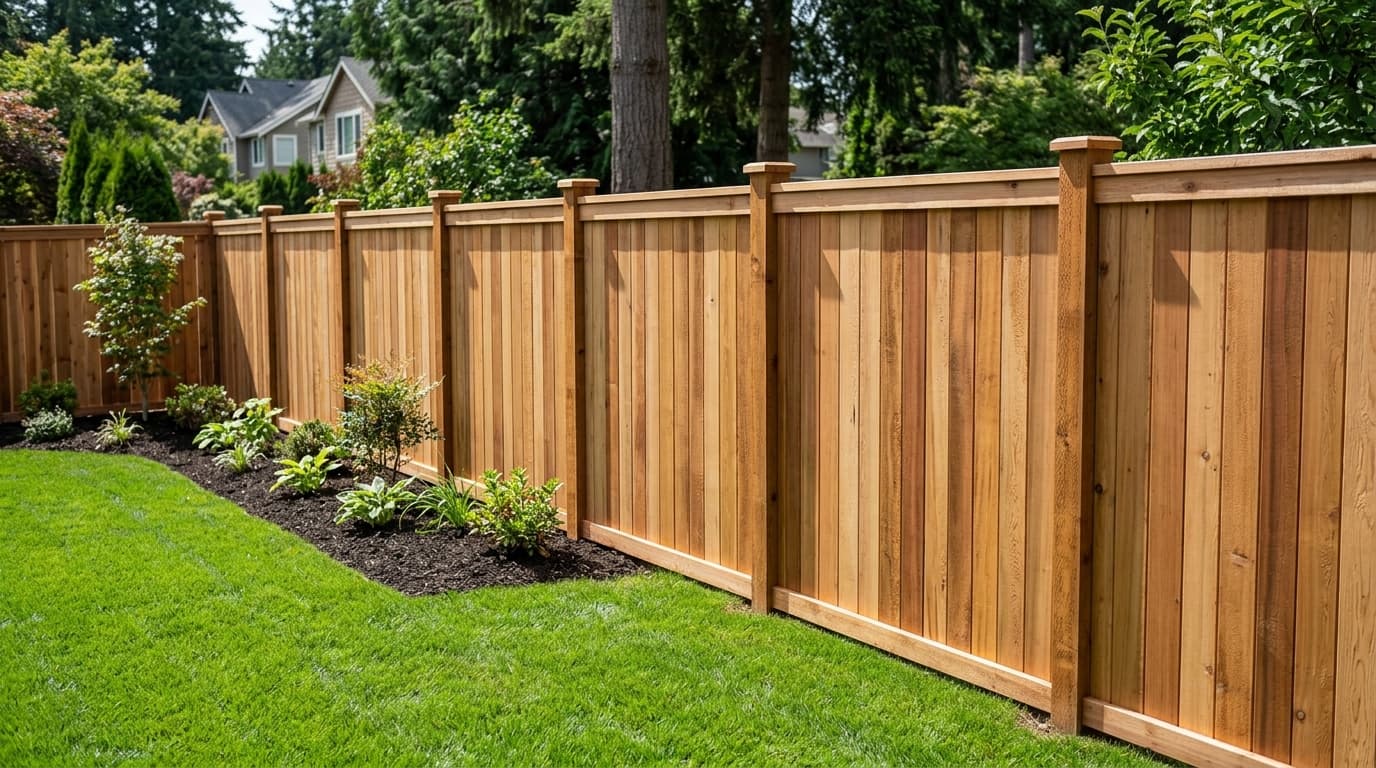
Wood Fence Installation Cost: By Material, Style & Linear Foot
By Renovation Cost Lab Editorial · Last reviewed 2025-01-01
Wood fence installation is usually budgeted per linear foot, driven mainly by the wood species and the fence style and height. As an editable planning order, pressure-treated pine is typically the lowest-cost species, cedar sits above it, and redwood is usually the most expensive; a tall solid-privacy fence costs more per foot than an open picket run. On top of the panels you add posts set in concrete, gates, and any site work. Height, hidden rot-prone post bases, sloped or rocky terrain, and getting the line right on the property boundary all move the total. Use these editable planning assumptions with your own local quotes — they are not national averages. This is budgeting only, not structural design: fence post depth, height limits, and placement are governed by local building code, zoning, and HOA rules and often require a permit and inspection, so confirm requirements with your local building department and a licensed contractor.
Key cost factors
- Total length (linear feet)
- Wood species (pressure-treated, cedar, redwood)
- Fence style and height (picket, privacy, shadowbox)
- Posts, post depth, and concrete setting
- Number and size of gates
- Terrain, access, permits, and property-line survey
Quick Cost Overview
Wood fence cost is almost always budgeted per linear foot, then adjusted for the wood species and the style and height you choose. A short picket run in pressure-treated pine and a tall solid-privacy fence in cedar can differ sharply per foot even over the same length.
Length sets the base, but the pieces that surround the panels matter too: posts set in concrete at regular spacing, each gate, and any site work to deal with slope, rock, or removing an old fence. Treat every unit price as an editable planning assumption and replace it with a local quote. This is for budgeting only; it does not size posts, set depth, or confirm placement, and is not a substitute for structural design or a boundary survey.
Cost by Wood Species and Style
Two choices dominate the per-foot number: the wood species and the fence style/height. The relative order below is more reliable than exact dollars, so adjust to local quotes.
By species:
| Species | Relative cost | Traits |
|---|---|---|
| Pressure-treated pine | Lowest | Most affordable and widely available; treated against rot and insects; can warp or check as it dries |
| Cedar | Moderate | Naturally rot- and insect-resistant, dimensionally stable, attractive grain; weathers gray if left unsealed |
| Redwood | Highest | Premium appearance and natural durability; limited availability raises cost in many regions |
By style and height:
| Style | Relative cost per foot | Traits |
|---|---|---|
| Picket | Lower | Open spacing, usually shorter; less material per foot; decorative and semi-open |
| Shadowbox (board-on-board) | Moderate | Boards alternate on each side; near-privacy with airflow and a finished look from both sides; more material than picket |
| Solid privacy | Higher | Full-height solid boards with no gaps; the most material and often the tallest, so it costs the most per foot |
Height multiplies the effect: a taller fence uses more boards per foot and deeper, stronger posts. Combine a species and a style in the direction your budget allows, then adjust to local quotes.
Posts, Concrete, and Gates
The parts beyond the panels are easy to under-budget:
- Posts. Set at regular spacing and usually the first thing to fail, so species, size, and setting method matter. They are often set in concrete, which adds material and labor per post.
- Post depth. Deeper posts resist frost heave and wind load; required depth varies by region and code and raises digging and concrete cost.
- Gates. Each gate costs more per foot than a fence run because of hinges, latches, and bracing; wider or double gates cost more still.
- Hardware and finish. Corrosion-resistant fasteners and an optional stain or seal add to both the upfront and the maintenance budget.
DIY vs. Professional Installation
Installing a wood fence can be DIY for a fit, patient homeowner on flat, clear ground — the hard parts are digging consistent post holes, setting posts plumb in concrete, and keeping the whole run straight and level. Rocky or sloped terrain, long runs, tall privacy fences, and gates that must stay square over time push the job toward a professional. Many owners dig and set posts themselves and hire out the panels, or hire the whole job on difficult sites. Either way, confirm the property line and local rules before the first post goes in.
Terrain, Property Lines, Permits & When a Pro Is Needed
This section is for budgeting, not engineering or legal advice. Several non-material factors routinely change a fence budget — and some can cause real problems if ignored:
- Terrain. Slopes require stepped or racked panels and more labor; rocky or root-filled soil slows digging; poor access raises cost.
- Property lines. Build on your own land. A fence placed over the boundary can trigger disputes or forced removal. A survey or marked line is worth it when the boundary is uncertain.
- Permits, zoning, and HOA. Height limits, setback from the street or sidewalk, allowed styles, and which side faces out are commonly set by local zoning, code, or HOA rules. Many areas require a permit and sometimes an inspection.
- Utilities. Always have underground utilities located before digging post holes.
Requirements vary by jurisdiction. Treat any depth and post figures as a planning allowance only — they do not set post depth or confirm placement. Confirm property lines, zoning, HOA, and permit requirements with your local building department, and consult a licensed contractor when terrain, height, or boundaries are in question.
Common Budget Mistakes
- Pricing only the panels and forgetting posts, concrete, gates, and hardware.
- Comparing a short picket price to a tall solid-privacy fence, which are different styles and heights.
- Skipping a property-line check and building over the boundary.
- Ignoring zoning, HOA, or permit rules on height, setback, and style.
- Under-setting posts for the local frost depth and wind load, leading to early failure.
- Treating a national "average" as your quote. Always confirm locally with a licensed contractor.
Frequently asked questions
- How is wood fence cost priced?
- Almost always per linear foot, driven by the wood species and the fence style and height, with posts set in concrete, gates, and site work added on top. Our planning figures model each as an editable assumption rather than a fixed quote — adjust them to your local prices.
- Do I need a permit to build a wood fence?
- Often yes, but it varies by jurisdiction. Fence height, setback, allowed style, and which side faces out are commonly governed by local zoning, building code, or HOA rules, and many areas require a permit and sometimes an inspection. Check with your local building department and your HOA before you build.
- Which costs more, cedar or pressure-treated pine?
- As a planning order, pressure-treated pine is typically the lowest-cost species, cedar sits above it for its natural rot resistance and appearance, and redwood is usually the most expensive. The exact gap depends on local availability, so confirm with local quotes.
Sources & pricing methodology
- Renovation Cost Lab editable demonstration datasetDefault unit prices are reasonable planning assumptions, not verified national averages. See our pricing methodology.
- Local building department, zoning & HOA rules (general reference)Fence height, setback, post depth, placement, permit, and inspection requirements vary by jurisdiction and HOA. This guide is for budgeting only, not structural design or legal advice — confirm requirements and property lines locally and consult a licensed contractor.
See our full pricing methodology and editorial policy.