
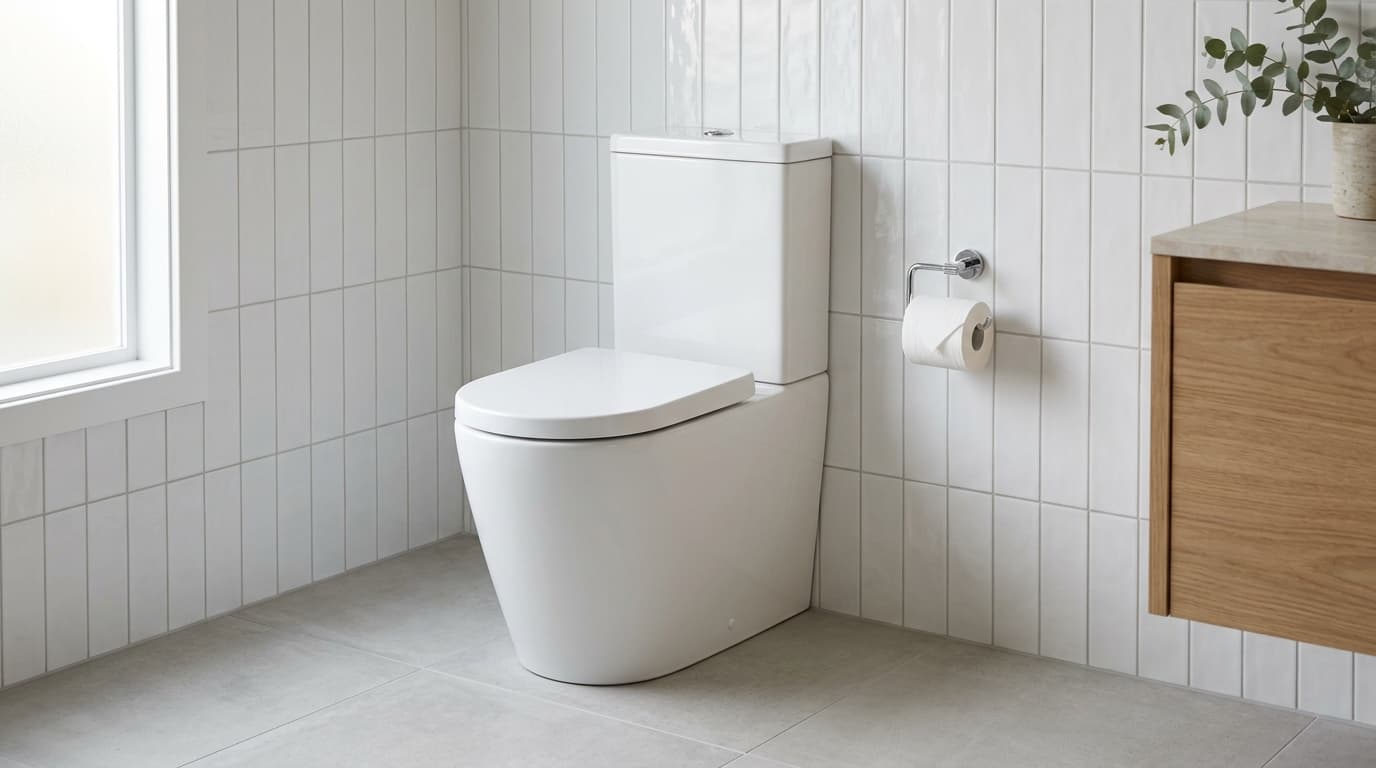
Toilet Installation Cost: Unit Tiers, Install & Relocation
By Renovation Cost Lab Editorial · Last reviewed 2025-01-01
Toilet installation cost is the toilet unit plus labor. As an editable planning assumption, a basic swap on an existing, sound connection is the least expensive scenario, while replacing a damaged flange or relocating the toilet adds significant cost. Relocating a toilet means moving drain and supply lines — a real plumbing project, not a swap. Treat these figures as planning starting points and adjust to local quotes.
Key cost factors
- Toilet unit tier (standard, comfort-height, dual-flush, smart/bidet)
- Basic swap vs. repair of the existing connection
- Flange condition and wax ring / seal replacement
- Relocating the toilet (moving drain and supply lines)
- Floor condition and any hidden water damage
- Removal and disposal of the old toilet
Quick Cost Overview
Toilet installation cost has two parts: the toilet unit and the installation labor. For a straight swap where the existing drain flange and supply line are in good shape, the labor is modest. Costs climb when the flange is damaged, the floor is compromised, or you want to move the toilet to a new spot.
Every price in our tools is an editable planning assumption, not a verified national average. Start from the defaults and replace them with your own local quote.
Cost Drivers: Unit Tiers and Install
The toilet itself spans a wide range by tier, and the install scenario changes the labor line:
| Scenario | What it includes | Relative cost |
|---|---|---|
| Standard unit, basic swap | Remove old toilet, set new one on a sound flange with a fresh seal | Lower |
| Comfort-height / dual-flush unit | Mid-tier fixture, same basic install | Low–moderate |
| Smart / bidet-integrated unit | Higher-tier fixture; may need a nearby electrical outlet | Higher (unit + possible electrical) |
| Swap + flange repair | Repair or replace a damaged closet flange, then set | Moderate |
| Relocation | Move drain and supply lines to a new position | Much higher (plumbing project) |
The gap between a basic swap and a relocation is large, so pin down your scenario before you budget.
Flange and Wax Ring / Seal Replacement
The closet flange anchors the toilet to the drain pipe, and the wax ring (or modern waxless seal) makes the watertight connection. On an older toilet, these are common culprits behind leaks and rocking. Replacing the seal is routine during any swap; repairing a cracked or corroded flange is extra labor and sometimes requires lifting flooring.
If you find soft flooring, staining, or a persistent smell, there may be hidden water damage below the toilet. That is a sign to bring in a professional to assess the subfloor before resetting a toilet on top of it.
Relocating a Toilet Is a Big Job
Moving a toilet even a short distance is not a fixture swap — it means rerouting the drain (which needs correct slope and venting) and the water supply. That is real plumbing work that frequently requires opening floors or walls, a permit, and a licensed plumber. Budget for it as a plumbing project, not a toilet purchase.
Because drain slope, venting, and connections affect sanitation and code compliance, relocation is where DIY most often goes wrong. Get professional guidance before committing to a new toilet location.
Critical Safety and Code Note
A basic toilet swap is one of the more approachable plumbing tasks, but regulated plumbing work is not universally safe DIY. Moving drain or supply lines, altering venting, or working where there may be water damage can create leaks, sanitation problems, and code violations.
Relocation and significant plumbing changes commonly require a permit, a licensed plumber, and an inspection, and plumbing codes vary by jurisdiction. We do not provide step-by-step instructions for hazardous or regulated plumbing work. When in doubt, confirm requirements with your local building department and hire a licensed pro.
DIY vs. Professional Installation
Replacing a toilet on an existing, sound flange and supply line is a common DIY task for a careful homeowner: it mainly involves shutting off water, removing the old unit, replacing the seal, and setting the new toilet level and snug. Even so, overtightening can crack porcelain and a bad seal causes leaks.
Call a professional when the flange is damaged, the floor is soft or stained, you are installing a smart/bidet unit that needs electrical, or you are relocating the toilet. Those cross into regulated plumbing and sometimes electrical work.
Signs You Need a Pro
- The toilet rocks, leaks at the base, or has a persistent sewer smell.
- The closet flange is cracked, corroded, or below the finished floor.
- The floor around the toilet feels soft or shows water staining.
- You want to move the toilet to a new location.
- A smart or bidet unit needs a new electrical outlet.
Common Budget Mistakes
- Budgeting for a swap when the flange or subfloor actually needs repair.
- Treating a relocation like a fixture swap — it is a plumbing project with a permit.
- Forgetting a new supply line, seal, bolts, and disposal of the old unit.
- Overlooking that a smart/bidet toilet may require nearby electrical work.
- Treating a national "average" as your quote. Always confirm locally.
Frequently asked questions
- Is replacing a toilet a DIY job?
- A straight swap on a sound flange and supply line is a common DIY task for a careful homeowner. Flange repair, hidden floor damage, electrical for smart units, and relocation are better left to a professional.
- Why does relocating a toilet cost so much more?
- Relocation means rerouting the drain (with correct slope and venting) and the supply line, which usually involves opening floors or walls, a permit, and a licensed plumber. It is a plumbing project, not a fixture swap.
- Do I need a permit to replace a toilet?
- A like-for-like swap often does not, but moving plumbing lines or altering venting commonly does. Codes vary by jurisdiction, so confirm with your local building department before relocating a toilet.
Sources & pricing methodology
- Renovation Cost Lab editable demonstration datasetDefault unit prices are reasonable planning assumptions, not verified national averages. See our pricing methodology.
- International Association of Plumbing & Mechanical Officials — plumbing code overview (general reference)General educational reference for plumbing-code concepts; always verify requirements with your local jurisdiction.https://www.iapmo.org/
See our full pricing methodology and editorial policy.