
Gutter Guards Cost: Types, Installation & Budget Guide
By Renovation Cost Lab Editorial · Last reviewed 2025-01-01
Gutter guards are usually budgeted per linear foot, and the type you choose is the biggest swing: foam and brush inserts sit at the low end, screen and mesh in the middle, and micro-mesh or professionally installed reverse-curve systems at the high end. Length, roof height and access, and whether your existing gutters are sound all move the number. Guards reduce how often you clean gutters — they do not eliminate cleaning entirely. Treat every figure here as an editable planning assumption, not a national average, and confirm with local quotes.
Key cost factors
- Guard type (foam, brush, screen, mesh/micro-mesh, reverse-curve)
- Total linear feet of gutter to cover
- Roof height, pitch, and ease of access
- DIY snap-in vs professional installation
- Condition of existing gutters (repair or replacement first)
- Material quality and warranty tier within a type
Quick Cost Overview
Gutter guard pricing starts with the same measurement as gutters themselves: the total linear feet of gutter you want to protect. That length is multiplied by a per-foot rate that depends heavily on the type of guard and whether you install it yourself or hire a crew.
At the budget end, foam and brush inserts are inexpensive per foot and DIY-friendly. In the middle sit screen and standard mesh. At the premium end, micro-mesh and reverse-curve systems — especially when professionally installed with a warranty — can rival or exceed the cost of the gutters underneath them. Every figure here is an editable planning assumption; replace it with a local quote before you budget.
Cost by Gutter Guard Type
Type is the single biggest driver of the per-foot rate. The table compares the common categories, lowest to highest relative cost:
| Type | Relative cost | How it works & trade-offs |
|---|---|---|
| Foam insert | Lowest | Porous foam block that sits inside the gutter; cheap and DIY, but can hold debris and degrade in sun over time |
| Brush | Low | Bristle "pipe-cleaner" laid in the gutter; simple to drop in; fine debris and seeds can still lodge in the bristles |
| Screen | Low to moderate | Perforated metal or plastic screen; blocks leaves well but lets small grit through; large openings pass pine needles |
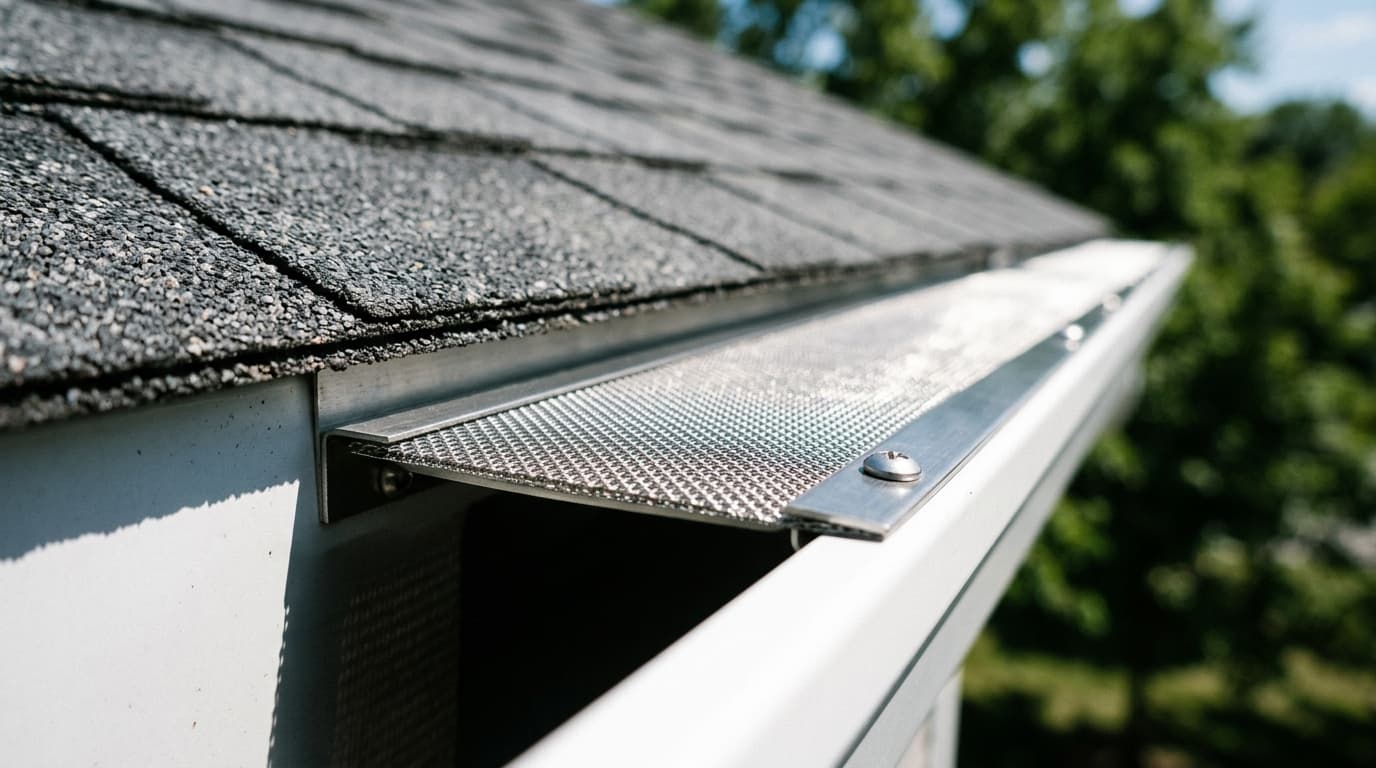
| Mesh / micro-mesh | Moderate to high | Fine stainless mesh on a frame; stops most debris including needles; higher-end micro-mesh is often pro-installed |
| Reverse-curve (surface tension) | Highest | Solid hood that guides water over a nose while debris falls off; usually professional-only, warranty-backed, premium price |
Within any single type there is also a quality range — a thin aluminum micro-mesh and a heavy stainless one are both "mesh" but priced very differently. Match the warranty and material gauge to the price, not just the category name.
What Drives Installation Cost
Beyond the guard type, a handful of factors move the labor and total. Treat them independently rather than assuming one number covers the house:
- Linear feet. The base quantity, the same roofline length you would use to price gutters.
- Roof height and access. A tall or steep roof, or one over landscaping, decks, or slopes, is slower and more expensive to work on than an easy single-story run — and it raises the fall risk that pushes many homeowners toward a pro.
- Existing gutter condition. Guards are only as good as the gutters under them. Sagging, leaking, or clogged gutters often need cleaning, re-pitching, or replacement first, which is a separate cost. See our gutter replacement cost guide if the gutters themselves are failing.
- DIY vs. professional. Snap-in foam, brush, and many screens are sold by the section for self-install. Reverse-curve and premium micro-mesh systems are typically sold installed, bundling labor, materials, and a workmanship warranty into one per-foot price.
- Removal of old guards. If you are replacing failed guards, budget a small line for taking out and disposing of the old ones.
DIY vs. Professional Installation
Many guard types are genuinely DIY. Foam and brush inserts drop in with no fasteners, and most screens snap under the shingles or clip to the gutter lip with basic tools. The real question is not the product — it is the ladder work. Reaching a one-story gutter from a stable ladder over flat ground is one thing; working along a two-story roofline, over a slope, or on a steep pitch is a genuine fall hazard.
Premium reverse-curve and high-end micro-mesh systems are usually sold as professional installations and are often tied to their warranty — self-installing may void coverage. If the roof is high or steep, or if you are not confident and equipped for ladder work, the labor premium for a pro is also buying safety. Price DIY and professional options as two different line items and compare them honestly.
Do Gutter Guards Eliminate Cleaning?
No — and any product that promises you will never clean gutters again is overselling. Guards reduce how often and how messily you clean, which is a real benefit, but they do not make maintenance disappear:
- Fine debris — shingle grit, pollen, seeds, pine needles — can still collect on top of or inside many guards.
- The surface of mesh and micro-mesh needs occasional brushing or rinsing so water can keep passing through.
- Downspouts and corners can still clog even when the straight runs stay clear.
- Overhanging trees shorten the interval between cleanings regardless of guard type.
Budget guards as a way to make gutter maintenance less frequent and less dangerous, not as a one-time purchase that ends it. If a quote is built around a "never clean again" promise, read the warranty closely.
Common Budget Mistakes
- Comparing a DIY foam price against a professionally installed reverse-curve quote as if they were the same product.
- Installing guards over sagging or leaking gutters that should be repaired or replaced first.
- Ignoring roof height and access, which can make the labor — and the safety risk — far larger than the materials.
- Believing a "no more cleaning, ever" claim; guards reduce cleaning, they do not end it.
- Treating a national "average" as your quote. Always confirm locally.
Estimate your project
Adjust the inputs to match your project and local prices.
Gutter stock. Copper is the most expensive; vinyl the cheapest.
Height factor only. Combined with — but separate from — install difficulty.
Access, roof pitch, and layout. A separate labor multiplier from stories.
Leave 0 to use the $4.50/ft base before difficulty and story multipliers.
Hangers, sealant, flashing.
Frequently asked questions
- How are gutter guards priced?
- Most commonly per linear foot of gutter, with the guard type as the biggest driver — foam and brush at the low end, screen and mesh in the middle, micro-mesh and professionally installed reverse-curve systems at the high end. Roof height and access, and whether your gutters need repair first, also move the total.
- Will gutter guards stop me from ever cleaning my gutters?
- No. Guards reduce how often you clean and how much debris gets inside, but fine grit, pollen, and needles can still accumulate, and downspouts can still clog. Plan on occasional maintenance rather than treating guards as a permanent fix.
- Can I install gutter guards myself?
- Foam, brush, and many screen guards are designed for DIY and need only basic tools. The limiting factor is ladder and roof safety, not the product — high or steep rooflines are a real fall risk. Premium reverse-curve and micro-mesh systems are usually sold installed and may require professional installation to keep their warranty.
Sources & pricing methodology
- Renovation Cost Lab editable demonstration datasetDefault per-foot prices by guard type are reasonable planning assumptions, not verified national averages. See our pricing methodology.
- Industry installation guidance (general reference)General educational reference for gutter guard types, maintenance, and install practices; verify current local pricing and manufacturer warranty terms before budgeting.
See our full pricing methodology and editorial policy.