
Roof Flashing Repair Cost: Chimneys, Valleys, Vents & Step Flashing
By Renovation Cost Lab Editorial · Last reviewed 2025-01-01
Flashing repair cost depends far more on the location and the fix than on raw size. Re-sealing a small gap is at the low end; reflashing a chimney or valley is in the middle; tearing into surrounding shingles to replace failed step flashing is at the high end. Roof height, pitch, and access drive labor and safety. Flashing is where most roof leaks start, so a small flashing repair now often prevents a much larger one later. Treat every figure here as an editable planning assumption, not a national average, and get local quotes. Roof work is a fall hazard — a steep or high roof is a job for a professional.
Key cost factors
- Flashing location (chimney, valley, vent/pipe boot, step, drip edge)
- Fix type (re-seal vs reflash vs full replacement)
- How much surrounding shingle must be lifted or replaced
- Roof height, pitch, and ease of access
- Flashing material (aluminum, galvanized steel, copper, lead)
- Extent of any water damage already behind the flashing
Quick Cost Overview
Flashing is the metal that seals the joints and transitions on a roof — where it meets a chimney, a wall, a valley, or a vent pipe. Unlike gutters, flashing is not priced by the foot in any simple way; the cost is driven by where the flashing is, what the fix is, and how hard the roof is to work on.
At the low end, re-sealing a cracked bead of sealant or a lifted edge is quick. In the middle, reflashing a chimney or valley involves new metal and careful integration with the shingles. At the high end, replacing step flashing means lifting or replacing courses of shingles to get at it. Every figure here is an editable planning assumption — replace it with a local quote for accuracy.
Cost by Flashing Location and Fix
The same roof can have very different flashing costs depending on the spot and how far gone it is. The table summarizes the common locations and typical fixes, lowest to highest relative effort:
| Location | Typical fix | Relative cost & notes |
|---|---|---|
| Vent / pipe boot | Replace boot or re-seal collar | Lowest — small part, but a very common leak source; cracked rubber boots are cheap to swap |
| Sealant / caulk joint | Clean and re-seal | Low — a stopgap on sound flashing, not a fix for failed metal |
| Chimney flashing | Reflash base and counter-flashing | Moderate to high — multiple pieces, masonry integration, often needs the counter-flashing reset into the mortar |
| Valley flashing | Reflash the valley | Moderate to high — long run carrying heavy water flow; shingles along both sides are disturbed |
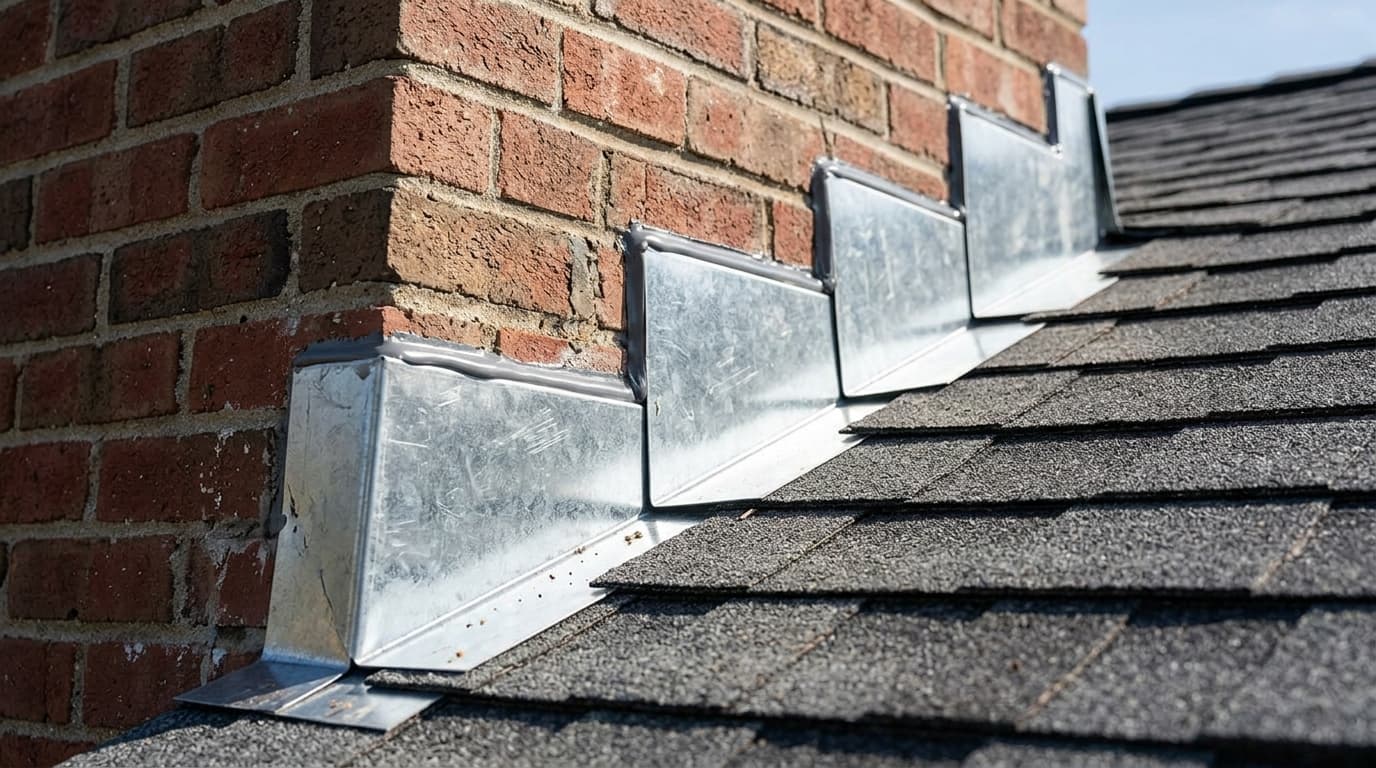
| Step flashing (roof-to-wall) | Replace interleaved pieces | High — each piece is woven into a shingle course, so shingles and sometimes siding must come off to redo it |
Material matters too: aluminum and galvanized steel are economical, while copper and lead cost more and are usually reserved for premium or historic work.
Why Roof Leaks Usually Start at the Flashing
A field of intact shingles sheds water well. The weak points are the transitions — and that is exactly what flashing covers. Leaks concentrate there because:
- Flashing relies on sealant and overlaps that age, crack, and pull loose while the shingles around them still look fine.
- Chimneys and walls move differently than the roof, stressing the metal and the seal between them.
- Valleys carry the combined runoff of two roof planes, so any flaw there sees a lot of water.
- Vent boots use rubber or neoprene collars that dry out and split before the roof is near the end of its life.
Because these are the first things to fail, a stain on a ceiling is more often a flashing problem than a worn-out roof. Catching it early is usually a modest repair; ignoring it lets water into the deck and framing and turns a small job into a large one.
Re-seal vs. Reflash vs. Replace
Not every flashing problem needs the same fix, and matching the fix to the damage controls the cost:
- Re-seal. If the metal is sound but the sealant has cracked, cleaning and re-sealing can buy real time. It is the cheapest option and the right one only when the flashing itself is intact — it is a maintenance step, not a cure for corroded or torn metal.
- Reflash. When the metal is corroded, bent, or poorly installed, replacing that section of flashing and re-integrating it with the shingles is the durable fix. This is the typical repair at chimneys, valleys, and walls.
- Replace / tie into a roof job. If the flashing has already let water into the deck, or the surrounding roofing is near the end of its life, redoing the flashing in isolation may not make sense. At that point, weigh it against a larger repair or replacement — see our roof repair vs. replacement guide.
Roof-Work Safety and When to Call a Pro
Flashing repairs happen on the roof, and roof work carries a real fall risk. This is the part of the job to be honest about before buying sealant and a ladder.
- Steep or high roofs are a professional job. The steeper the pitch and the higher the eave, the smaller the margin for error. A fall from a roof can be serious or fatal; the cost of a pro is also the cost of not being up there yourself.
- Chimney, valley, and step flashing usually need a pro anyway. Doing them right means integrating metal with shingle courses and sometimes masonry — work that is easy to botch into a worse leak.
- DIY is most defensible only on a low-pitch, single-story, easily accessed roof, in dry conditions, with proper footing and fall protection — and even then, re-sealing a boot is a very different undertaking than reworking step flashing.
- When in doubt, get an inspection. A professional can tell you whether you are looking at a quick repair or the early sign of a bigger problem, without you having to be on the roof to find out.
Treat the labor premium for a pro on a high or steep roof as buying safety, not just skill.
Common Budget Mistakes
- Re-sealing corroded or torn flashing as a permanent fix — sealant buys time on sound metal, nothing more.
- Pricing only the visible repair and ignoring water damage already in the deck or framing behind it.
- Underestimating how much surrounding shingle must be lifted to redo step or valley flashing.
- Attempting a steep or high-roof repair as a DIY job to save money, where a fall is the real cost.
- Treating a national "average" as your quote. Always confirm locally.
Frequently asked questions
- How is roof flashing repair priced?
- Mostly by location and fix type rather than by length. Re-sealing a small joint or swapping a vent boot is at the low end; reflashing a chimney or valley is in the middle; replacing step flashing is at the high end because surrounding shingles must be lifted or replaced. Roof height, pitch, and access then drive the labor.
- Why do most roof leaks start at the flashing?
- Because flashing seals the transitions — chimneys, walls, valleys, and vent pipes — which are the first places a roof fails. Sealant and overlaps age and crack, and different parts of the structure move against each other, while the open field of shingles can still look fine. A ceiling stain is more often a flashing issue than a worn-out roof.
- Can I repair roof flashing myself?
- Only cautiously, and only on a low, easily accessed roof in safe conditions. Roof work is a genuine fall hazard, and chimney, valley, and step flashing usually need a professional to integrate correctly with the shingles. On a steep or high roof, hire a pro — the labor cost is also buying safety.
Sources & pricing methodology
- Renovation Cost Lab editable demonstration datasetDefault repair ranges by location and fix are reasonable planning assumptions, not verified national averages. See our pricing methodology.
- Industry roofing and roof-safety guidance (general reference)General educational reference for flashing types, repair practices, and fall-risk safety; verify current local pricing and have steep or high roofs inspected by a professional.
See our full pricing methodology and editorial policy.