
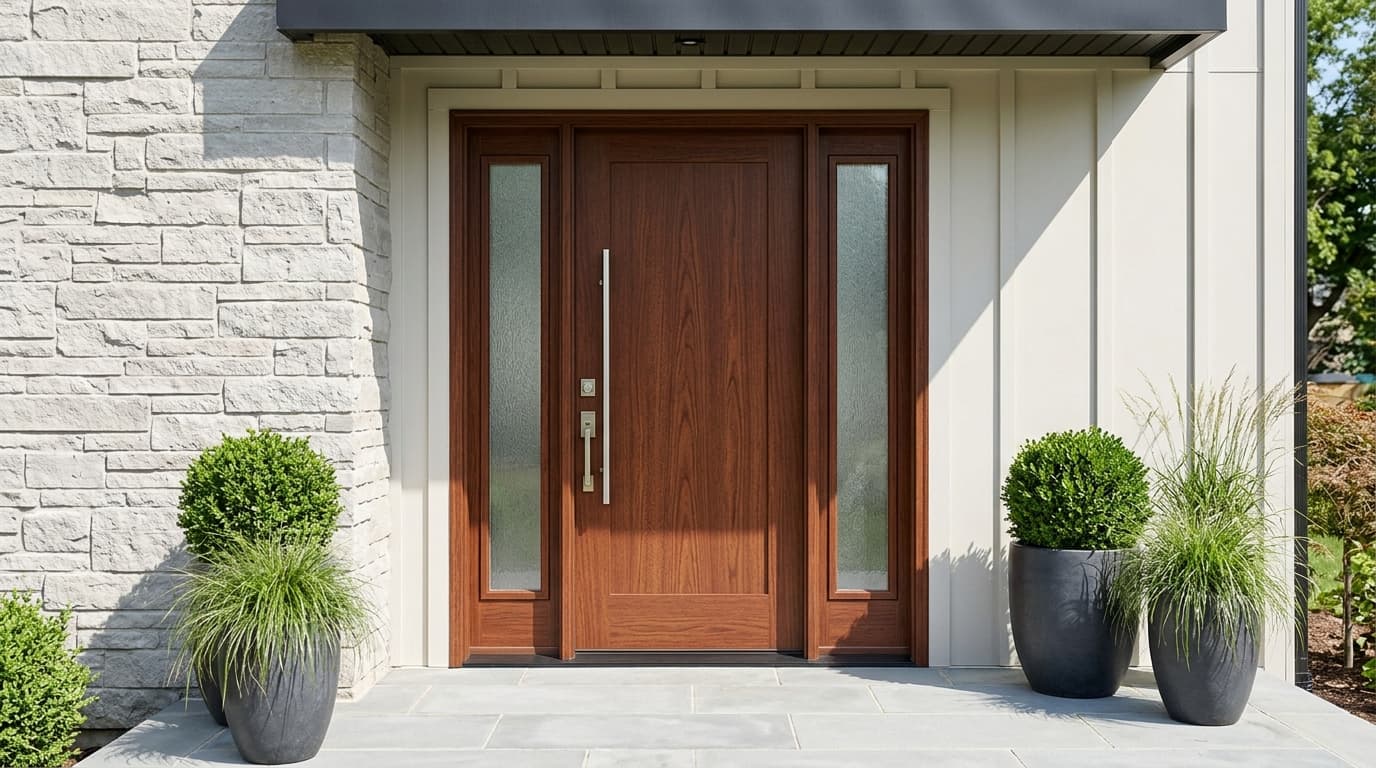
Front Door Replacement Cost: Steel vs. Fiberglass vs. Wood
By Renovation Cost Lab Editorial · Last reviewed 2025-01-01
A front (entry) door is usually budgeted as a door unit plus installation, and cost rises with the material, whether you buy a bare slab or a prehung unit, and whether you add sidelights, a transom, or upgraded hardware. As an editable planning model, steel tends to sit at the lower end, fiberglass in the middle, and solid wood at the higher end. A simple slab swap into good existing hardware is the cheapest path; a prehung unit with sidelights and a smart lock is the priciest. These are editable planning assumptions, not national averages; adjust them to your own local quotes.
Key cost factors
- Door material (steel, fiberglass, wood)
- Slab-only vs. prehung unit (frame included)
- Sidelights and/or a transom window
- Hardware level (basic lockset vs. smart lock and multipoint)
- Glass inserts, decorative panels, and finish
- Install complexity, old-door removal, and frame/threshold condition
Quick Cost Overview
A front door replacement combines the door unit (material, configuration, glass, and finish) with installation labor. The single biggest choices that move the budget are the material, whether you buy a bare slab or a prehung unit, and whether you add sidelights, a transom, or upgraded hardware.
Every figure below is a relative range and an editable planning assumption, not a national average. Confirm the real number with a local quote.
Cost Breakdown by Material
Material is usually the largest driver of the unit price. The table shows relative cost (not dollar figures) and the trade-offs:
| Material | Relative cost | Typical traits |
|---|---|---|
| Steel | Lower | Budget-friendly and secure; good insulation with a foam core, but can dent and may show rust if the finish is breached |
| Fiberglass | Moderate | Durable and low maintenance, resists dents and rot, can mimic wood grain; a popular middle option |
| Wood | Higher | Traditional look and feel, highly customizable; highest maintenance and typically the priciest, and sensitive to weather exposure |
Relative positions shift with brand, glass, and finish, so treat the ordering as a planning guide rather than a fixed ranking.
Slab vs. Prehung
How the door is supplied changes both cost and difficulty:
- Slab only. Just the door panel, no frame. It is cheaper and fits when your existing frame, jamb, and threshold are sound and square, and you are reusing the hinges and lockset locations. It demands precise fitting and mortising.
- Prehung unit. The door comes already hung in a new frame with hinges and sometimes bored for hardware. It costs more but installs more predictably and is the right call when the existing frame or threshold is damaged, rotted, or out of square.
A slab swap looks cheaper, but if the frame is compromised a prehung unit is often the honest choice.
Sidelights, Transoms, Glass & Hardware
Configuration and accessories add to both the unit and the install:
- Sidelights. Narrow glass panels beside the door widen the overall unit, add glass cost, and usually require a wider rough opening.
- Transom. A window above the door adds height and glass, and like sidelights can involve framing changes if you are adding one that was not there before.
- Glass inserts. Decorative or privacy glass in the door panel raises the unit cost over a solid panel.
- Hardware. A basic lockset is a small line item; a keypad or smart lock, a multipoint locking system, or premium handlesets add meaningfully. Confirm smart-lock compatibility with the door bore and thickness.
- Finish. A pre-finished or custom-painted/stained door costs more than an unfinished one you finish yourself.
DIY vs. Professional & Install Drivers
Swapping a prehung unit into a sound opening is achievable for a confident DIYer, and a simple slab swap reusing existing hardware locations is simpler still. The work that drives cost — and difficulty — is setting the door plumb, level, and square, flashing and sealing against water, and reinstating trim and threshold. A door that is out of plumb will not latch or seal, and poor flashing can cause rot you pay for later.
As a safety and security note, an entry door is also a security element, so correct strike-plate anchoring and a properly aligned deadbolt matter as much as looks. Adding sidelights or a transom that were not there before, widening the opening, or any frame repair beyond a straightforward swap are jobs most homeowners are better off hiring out.
Permits, When a Pro Is Needed & Common Mistakes
A like-for-like door replacement in the existing opening is often exempt from permits, but enlarging the opening to add sidelights or a transom can involve framing and, in a load-bearing wall, a structural header — which commonly requires a permit and inspection. Rules vary by jurisdiction, so confirm with your local building department rather than assuming.
- Budgeting the door unit only and forgetting installation, hardware, and finishing.
- Buying a slab when the frame or threshold is damaged and a prehung unit was the better value.
- Adding sidelights or a transom without accounting for the wider/taller opening and possible framing work.
- Choosing a smart lock without confirming it fits the door bore and thickness.
- Treating a national "average" as your quote. Always confirm locally.
Frequently asked questions
- Which front door material is cheapest — steel, fiberglass, or wood?
- As an editable planning assumption, steel typically sits at the lower end, fiberglass in the middle, and solid wood at the higher end. Steel is budget-friendly and secure; fiberglass is durable and low maintenance; wood offers the most traditional look but the highest maintenance and cost. Glass, finish, and hardware shift these positions, so compare like for like and confirm locally.
- Should I buy a slab or a prehung door?
- A slab (door panel only) is cheaper and fits when your existing frame, jamb, and threshold are sound and square. A prehung unit comes already hung in a new frame and installs more predictably, which is the better value when the existing frame or threshold is damaged or out of square. Match the choice to your opening's condition, not just price.
- Do sidelights, a transom, or a smart lock change the cost much?
- Yes. Sidelights and transoms widen or heighten the overall unit, add glass, and can require a larger rough opening with framing work. A smart lock or multipoint locking system adds to hardware cost over a basic lockset. Add each as its own line item in your budget and confirm fit before ordering.
Sources & pricing methodology
- Renovation Cost Lab editable demonstration datasetDefault material, configuration, and install factors are reasonable planning assumptions, not verified national averages. See our pricing methodology.
- ENERGY STAR — windows, doors & skylights guidance (general reference)General educational reference for entry-door energy concepts; verify current recommendations for your climate and needs.https://www.energystar.gov/products/windows_doors_skylights
See our full pricing methodology and editorial policy.