
Basement Waterproofing Cost: Sealants, Interior Drains & Excavation
By Renovation Cost Lab Editorial · Last reviewed 2025-01-01
Basement waterproofing cost depends almost entirely on the method, which depends on where the water is coming from. As an editable planning range, interior sealants are the cheapest, an interior drainage system with a sump pump is mid-range, and exterior excavation and membrane work is the most expensive. Before any of those, cheap fixes like regrading soil and extending gutters often help. Treat every figure here as a planning assumption and adjust to local quotes — these are not national averages.
Key cost factors
- The source of the water (surface runoff vs. hydrostatic pressure)
- Method chosen (sealant vs. interior drainage + sump vs. exterior excavation)
- Linear footage of wall or perimeter treated
- Depth of the basement and difficulty of excavation/access
- Whether a sump pump and discharge line are included
- Finish restoration (concrete, drywall) after the work
Quick Cost Overview
There is no single "basement waterproofing price" because the job can mean very different things. The biggest cost driver is the method, and the right method depends on where the water is coming from. Spending on an expensive exterior dig when the real issue is a clogged gutter wastes money.
Start with the cheapest diagnostics and fixes, then escalate only as needed. Every figure below is an editable planning assumption — replace it with a local quote before you commit.
Find the Water Source First
Water in a basement usually comes from one of two broad places: surface water (rain and runoff reaching the foundation) or hydrostatic pressure (groundwater pushing up or in through the slab and walls). The fix — and the cost — is completely different for each.
Two of the cheapest first steps address surface water directly:
- Regrade the soil so it slopes away from the foundation.
- Clean and extend gutters and downspouts so roof water discharges well away from the wall.
These low-cost steps resolve a surprising number of damp-basement complaints and should usually be tried before any interior or exterior system.
Methods Compared
The three main approaches differ sharply in cost and in when they are appropriate:
| Method | What it does | Relative cost | When it fits |
|---|---|---|---|
| Interior sealants / coatings | Waterproof paint or crack sealant on inside walls | Lowest | Minor dampness, condensation, small seepage; not for active hydrostatic pressure |
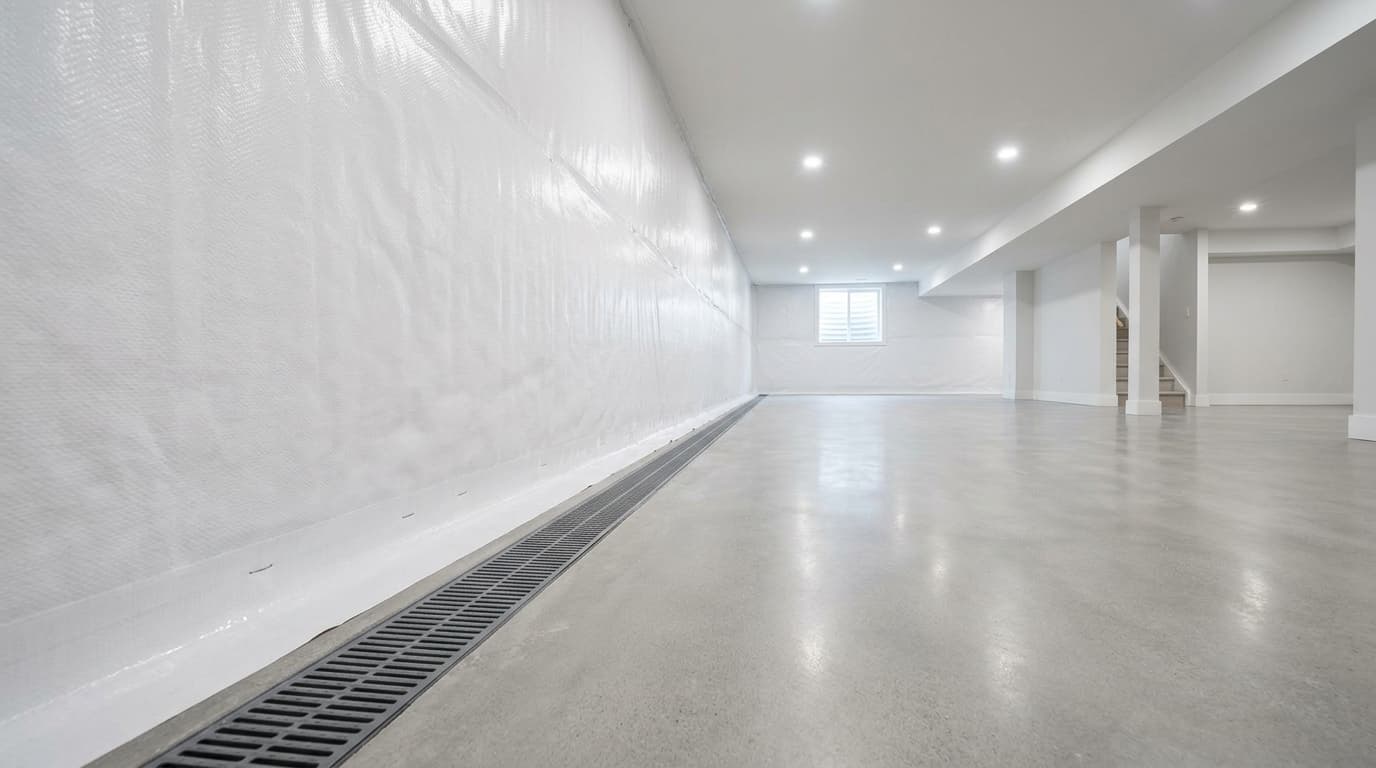
| Interior drainage + sump pump | Perimeter drain under the slab routes water to a sump pump | Medium | Recurring groundwater entry; manages water rather than blocking it |
| Exterior excavation + membrane | Dig to the footing, apply membrane and drainage outside | Highest | Severe outside-in water problems; most disruptive and expensive |
Interior sealants are tempting because they are cheap, but they do not stop water under pressure — they can even trap it. Match the method to the diagnosed source.
DIY vs. Professional Installation
Regrading, gutter extensions, and applying an interior sealant to minor cracks are common DIY tasks. Interior drainage systems involve cutting the slab and installing a sump; exterior excavation is heavy, specialized work. Both are professional jobs.
DIY sealants can make a damp wall look better without fixing the underlying problem, so be honest about whether you are treating a symptom or a cause.
When a Professional Should Assess the Problem
Bring in a qualified professional if you see recurring standing water, water entering under pressure, efflorescence over large areas, visible mold, or any sign of structural distress such as bowing, leaning, or stair-step cracks in the walls. Water intrusion and structural issues should be diagnosed by a qualified pro before you choose a method.
No contractor can honestly guarantee a permanently dry basement, especially in high water tables or flood-prone areas. Be skeptical of promises that sound absolute, and make sure the proposed method matches the water source that was actually identified.
Common Budget Mistakes
- Paying for an expensive system before trying cheap grading and gutter fixes.
- Using interior sealant against hydrostatic pressure it cannot hold back.
- Skipping diagnosis, so the chosen method does not match the water source.
- Forgetting restoration costs (concrete, drywall) after interior or exterior work.
- Treating a national "average" as your quote. Always confirm locally.
Frequently asked questions
- Which basement waterproofing method is cheapest?
- Interior sealants and coatings are generally the lowest-cost option, followed by interior drainage with a sump pump, with exterior excavation and membrane being the most expensive. But the cheapest method only helps if it matches the actual water source.
- What should I try before paying for waterproofing?
- Start with low-cost fixes for surface water: regrade the soil so it slopes away from the foundation, and clean and extend gutters and downspouts. These often reduce or resolve dampness and should be tried first.
- Can waterproofing guarantee a dry basement?
- No. These methods reduce the risk of water entry, but outcomes depend on the water source, your water table, and correct diagnosis and installation. We do not present a dry basement as guaranteed, and you should have water intrusion assessed by a qualified professional.
Sources & pricing methodology
- Renovation Cost Lab editable demonstration datasetDefault unit prices are reasonable planning assumptions, not verified national averages. See our pricing methodology.
- U.S. Environmental Protection Agency — moisture and mold in the home (general reference)General educational reference for moisture and mold concerns; consult a qualified professional for your situation.https://www.epa.gov/mold
See our full pricing methodology and editorial policy.