
French Drain Installation Cost: Interior vs. Exterior, Per Linear Foot
By Renovation Cost Lab Editorial · Last reviewed 2025-01-01
French drain cost is usually budgeted per linear foot, and the per-foot figure depends heavily on whether the drain is interior or exterior. As an editable planning range, an interior drain requires cutting the slab and tying into a sump, while an exterior drain requires open excavation around the foundation. Length, depth, and site access drive the total. Treat every figure here as a planning assumption and adjust to local quotes — these are not national averages.
Key cost factors
- Interior vs. exterior drain
- Linear footage of drain installed
- Excavation depth and soil/site conditions
- Concrete cutting and restoration (interior) or excavation/landscaping restoration (exterior)
- Tie-in to a sump pump or gravity outlet to daylight
- Access for equipment and any utility conflicts
Quick Cost Overview
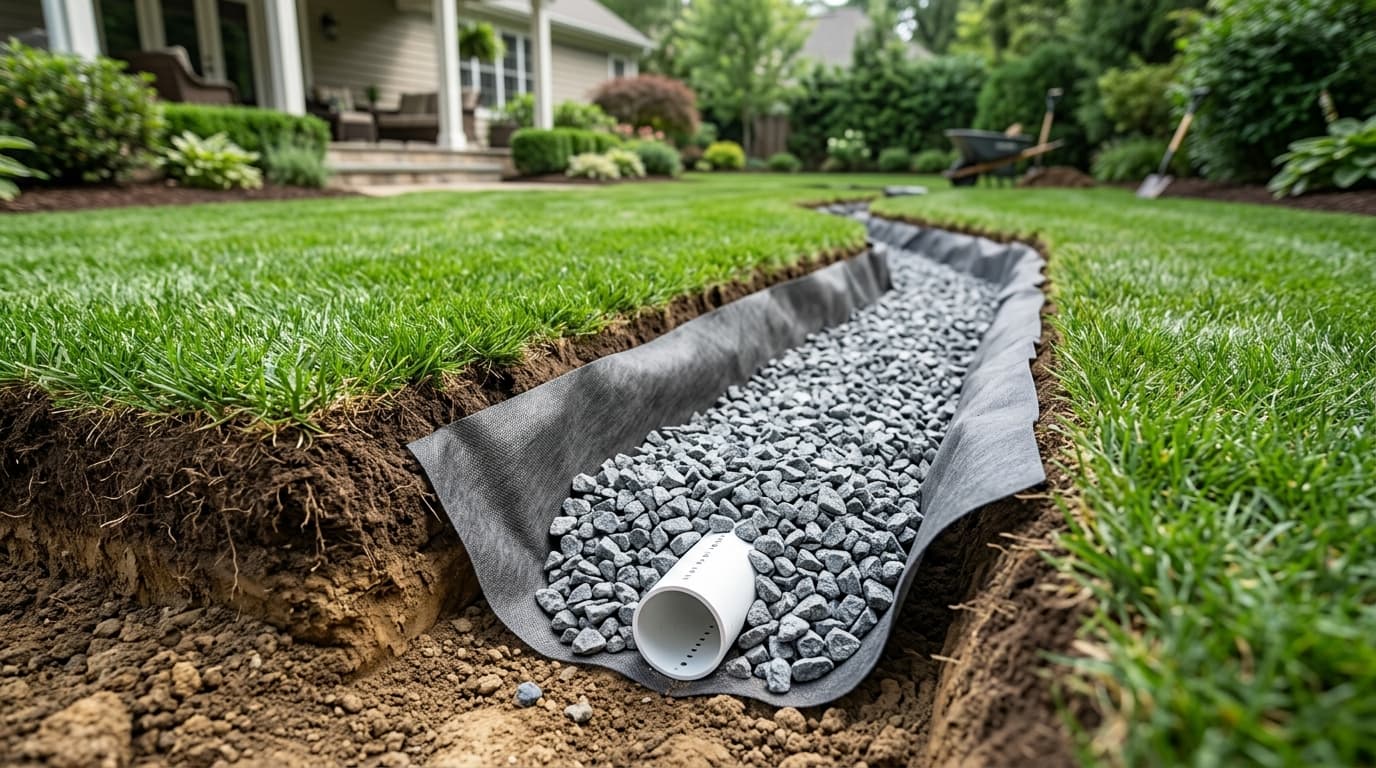
A French drain is a gravel-filled trench with a perforated pipe that collects water and routes it away. Cost is almost always discussed per linear foot, and that per-foot number swings widely based on whether the drain is interior or exterior and how deep and long it runs.
Interior drains involve cutting and patching the slab; exterior drains involve open excavation and restoring whatever is dug up. Every figure below is an editable planning assumption — replace it with a local quote before you commit.
Interior vs. Exterior French Drains
The two types solve the problem from opposite directions, and they are priced differently:
| Type | Where it goes | Relative cost driver | When it fits |
|---|---|---|---|
| Interior French drain | Trench inside the basement perimeter, under the slab | Per foot, plus concrete cutting and patching; usually ties into a sump | Managing water that reaches the inside; less disruptive to the yard |
| Exterior French drain | Trench outside, down to the footing | Per foot, driven by excavation depth and restoration of landscaping/hardscape | Intercepting water before it reaches the wall; more disruptive and often costlier |
Interior systems almost always discharge to a sump pump; exterior systems may drain by gravity to daylight if the grade allows, or also tie into a sump.
Cost Drivers and Breakdown
Beyond the interior/exterior choice, the main drivers are length and what has to be removed and restored:
- Linear footage: the single biggest driver; longer runs cost more.
- Excavation depth and soil: deeper trenches and rocky or clay soil slow the work.
- Concrete cutting (interior): cutting the slab and patching it back adds cost per foot.
- Restoration (exterior): replacing sod, plantings, patios, or walkways that sit over the trench.
- Sump tie-in: connecting the drain to a sump pump and discharge line, if not already present.
DIY vs. Professional Installation
A shallow exterior drain for surface water in an open yard can be a DIY project. Interior drains that require cutting the basement slab, and deep exterior drains down to the footing, are professional jobs involving heavy excavation, proper slope, and reliable tie-in to a sump.
Getting the slope and the outlet right is what makes a French drain work; a poorly pitched trench can hold water instead of moving it, so the cheapest quote is not always the best value.
Call Before You Dig, and When a Pro Is Needed
Before any digging — interior or exterior — have underground utilities located. In the U.S. this is a free service reached by calling 811 (or your regional one-call center) a few days ahead. Hitting a gas, electric, water, or communications line is dangerous and expensive, and the utility locate is not optional.
Bring in a qualified professional when the drain must tie into a sump, when excavation goes near the footing, or when there is recurring water intrusion, visible mold, or any structural concern in the basement. Water intrusion and structural issues should be assessed by a qualified pro. A French drain manages water — it does not guarantee a dry basement, and the water source still needs to be correctly diagnosed.
Common Budget Mistakes
- Pricing a drain by total job without checking the per-linear-foot basis.
- Skipping the 811/utility locate before digging.
- Forgetting concrete cutting/patching (interior) or landscape restoration (exterior).
- Ignoring the sump tie-in and discharge line the drain depends on.
- Treating a national "average" as your quote. Always confirm locally.
Frequently asked questions
- How is French drain installation priced?
- Most commonly per linear foot, with the per-foot figure depending on whether the drain is interior or exterior, how deep the trench is, and what has to be cut and restored. Longer runs and the tie-in to a sump also add to the total.
- Which is cheaper, an interior or exterior French drain?
- It depends on the site. Interior drains add concrete cutting and patching but avoid disturbing the yard; exterior drains require open excavation and restoration of landscaping or hardscape. Which is cheaper varies with depth, length, and site access, so compare local quotes.
- Do I need to call before digging a French drain?
- Yes. Have underground utilities located before any excavation, interior or exterior. In the U.S. call 811 (or your regional one-call center) a few days ahead — it is free and helps you avoid striking gas, electric, water, or communications lines.
Sources & pricing methodology
- Renovation Cost Lab editable demonstration datasetDefault unit prices are reasonable planning assumptions, not verified national averages. See our pricing methodology.
- Common Ground Alliance — Call 811 before you dig (general reference)General educational reference for utility locating before excavation; verify the process for your area.https://call811.com/
See our full pricing methodology and editorial policy.